Mike Cheng
PhD Candidate in Economics
Georgetown University
I am a fourth year Economics PhD candidate with research interests in international trade and industrial organization. My research focuses on the intersection of FDI, market power, and supply chain structure. I welcome coauthorship opportunities.
Education
Georgetown University
PhD Candidate in Economics
University of Chicago, Harris School of Public Policy
Master of Arts in Public Policy
Certificate of Research Methods and Certificate of Financial Policy
Recipient of Harris Merit Scholarship
June 2021
Carnegie Mellon University
Bachelor of Arts in Behavioral Economics, Policy and Organization
Minor in International Relations and Politics and Economics
Graduated with University Honor
Member of Omicron Delta Epsilon Honor Society
May 2019
Publication
Chapter 6: Foreign Direct Investment, Trade Finance and Global Value Chain Integration
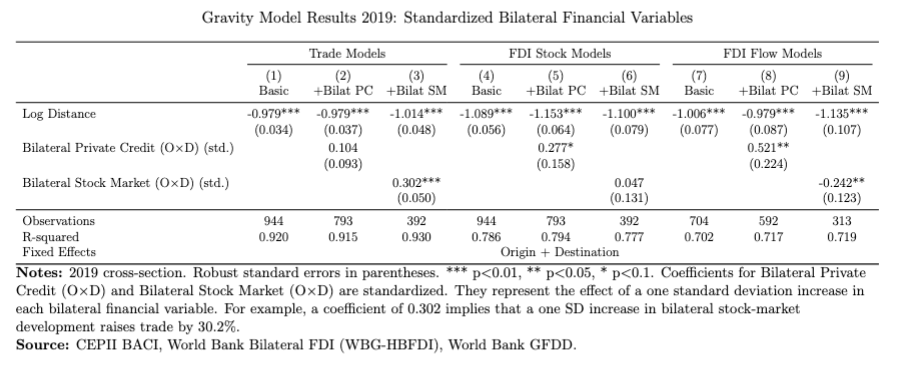
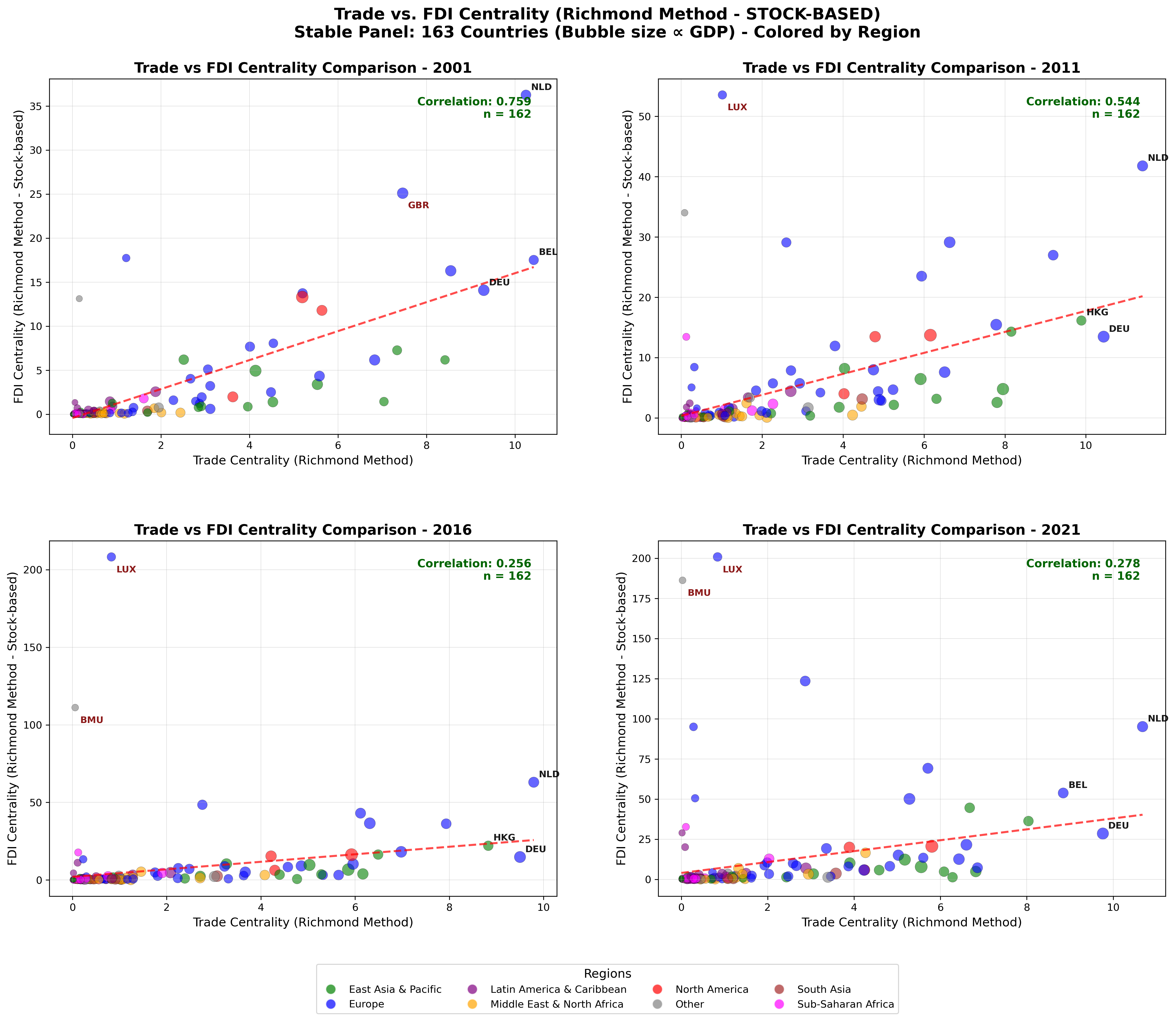
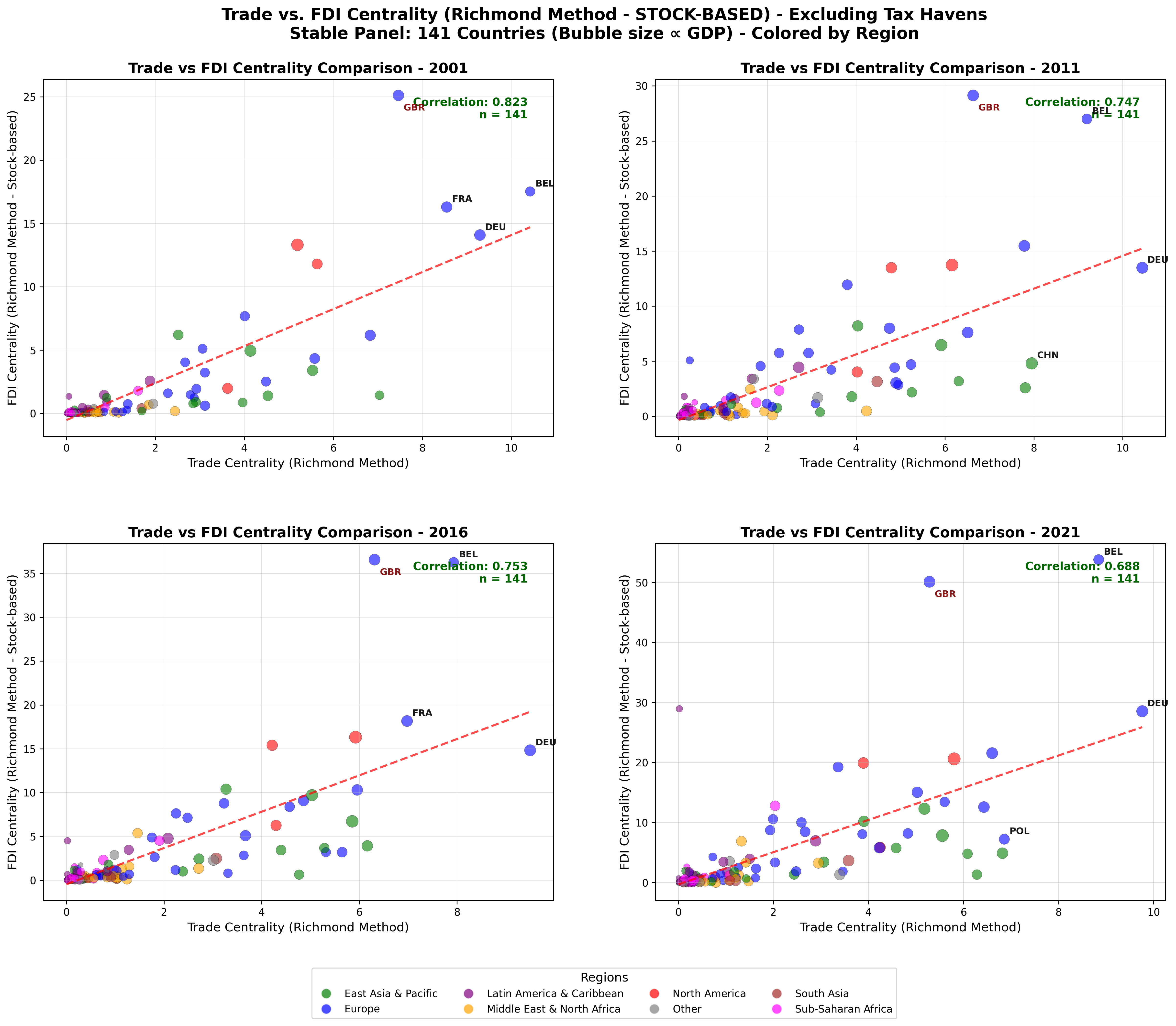
This chapter reconceptualizes the financial architecture of Global Value Chains (GVCs), arguing that Foreign Direct Investment (FDI) provides the structural foundation while Trade and Supply Chain Finance (TF/SCF) ensures operational fluidity. Using a gravity framework, we first show that trade and FDI have distinct financial underpinnings: trade is more sensitive to bilateral stock market development, while FDI responds more to private credit depth. Next, we apply network analysis to distinguish productive investment from "phantom FDI," revealing a resilient "real economy" network where trade and FDI centrality remain highly correlated once tax havens are excluded. Finally, our econometric analysis provides evidence of "GVC assimilation," showing that FDI fosters convergence in the use of capital inputs between source and host countries—a key channel for capital-embodied technology transfer—but not in intermediate inputs. We conclude that deep GVC integration requires a dual policy strategy that supports both long-term investment and the short-term financing that allows local firms to connect and upgrade within these global production networks.
Key Findings
Gravity Model Results 2019: Standardized Bilateral Financial Variables
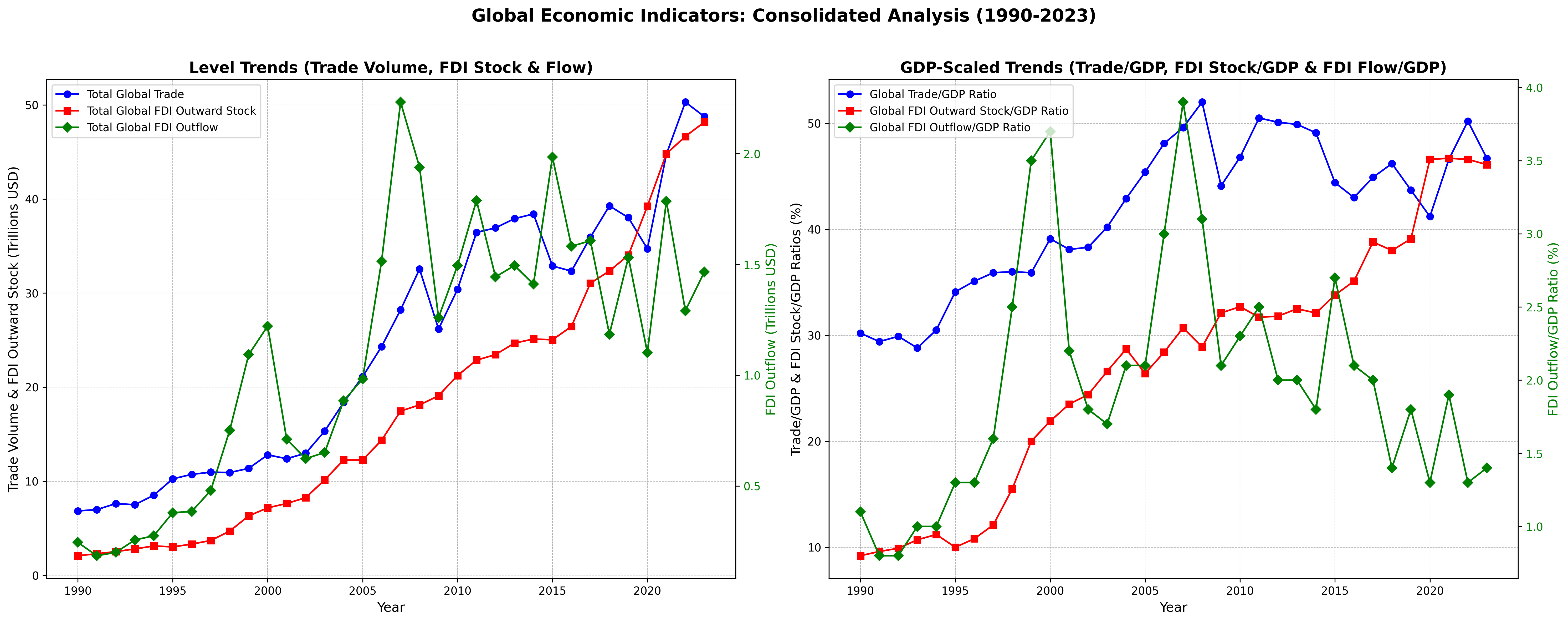
Global Economic Indicators: Consolidated Analysis (1990-2023)
Trade vs. FDI Centrality (Richmond Method - Stock-Based) - Stable Panel: 163 Countries
Trade vs. FDI Centrality (Richmond Method - Stock-Based) - Excluding Tax Havens: 141 Countries
Working Papers
Exporting Automation, Not Just Goods: Evidence from China's Industrial Robot Exports
This paper provides the first systematic analysis of who imports China's industrial robots, why they do so, and how competitive these robots are in global markets. Using bilateral trade data from 2005-2022, we document a structural transformation in China's position in global robotics trade: China has shifted from a net importer to a net exporter of industrial robots. Its exports are disproportionately directed toward emerging manufacturing hubs, particularly in Southeast Asia. Although Chinese robots are generally less technologically advanced than those produced by Japan, Germany, the United States, and South Korea, they offer the strongest "bang for the buck." These "good-enough" robots are especially attractive to price-sensitive, lower-income economies that are becoming new manufacturing platforms amid global supply-chain reconfiguration. Consistent with this mechanism, we document a U-shaped relationship between robot imports and GDP per capita: high-income economies adopt frontier robots to offset high labor costs, whereas low-income economies rely on cost-effective Chinese robots to compensate for weaker labor quality rather than high wages. Finally, using a fully specified general equilibrium framework, we conduct counterfactual policy simulations to evaluate how geopolitical and industrial policy shocks affect China's robot exports, relative wages, and global welfare. Our findings suggest that China is increasingly exporting production capability—not just products. More broadly, contrary to the view that automation substitutes for offshoring, our results show that cost-effective robots can travel with production as manufacturing relocates to lower-wage economies.
Going Overseas: FDI Decisions and Supply Chain Integration
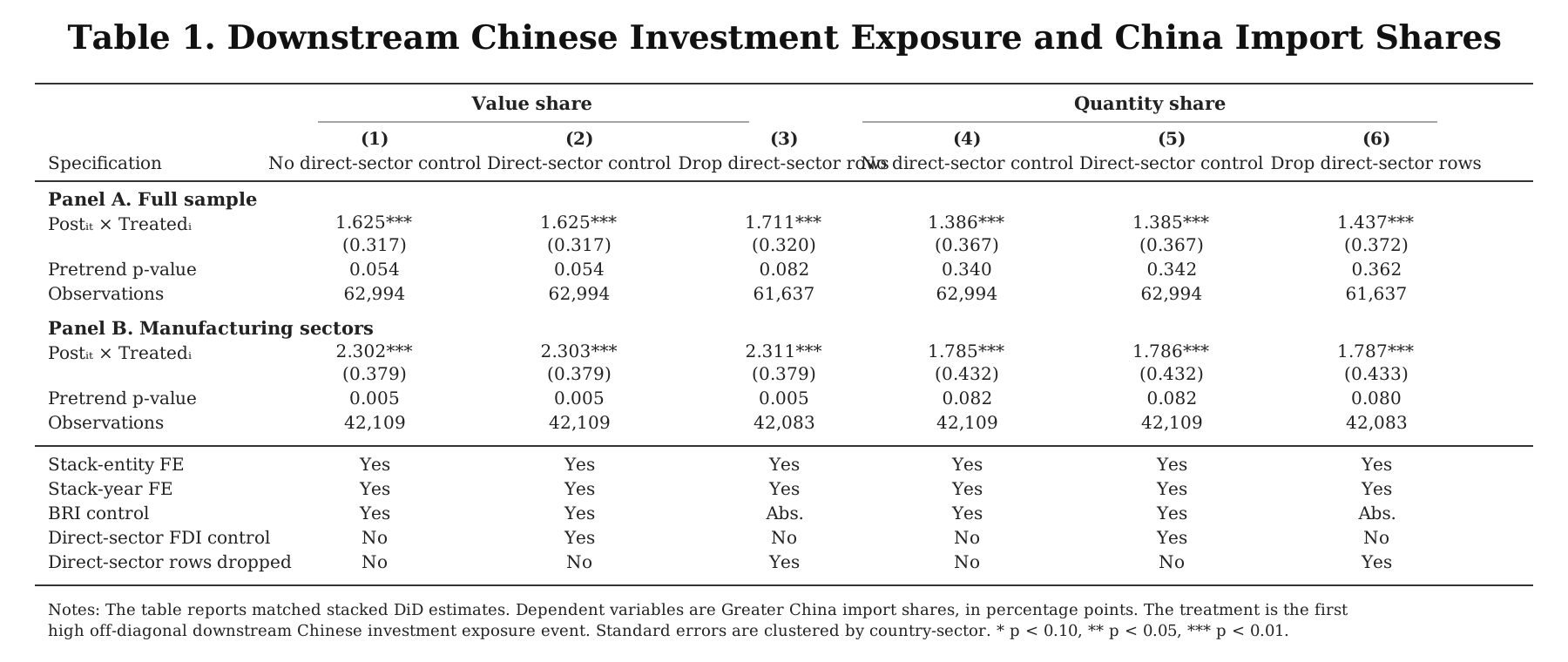
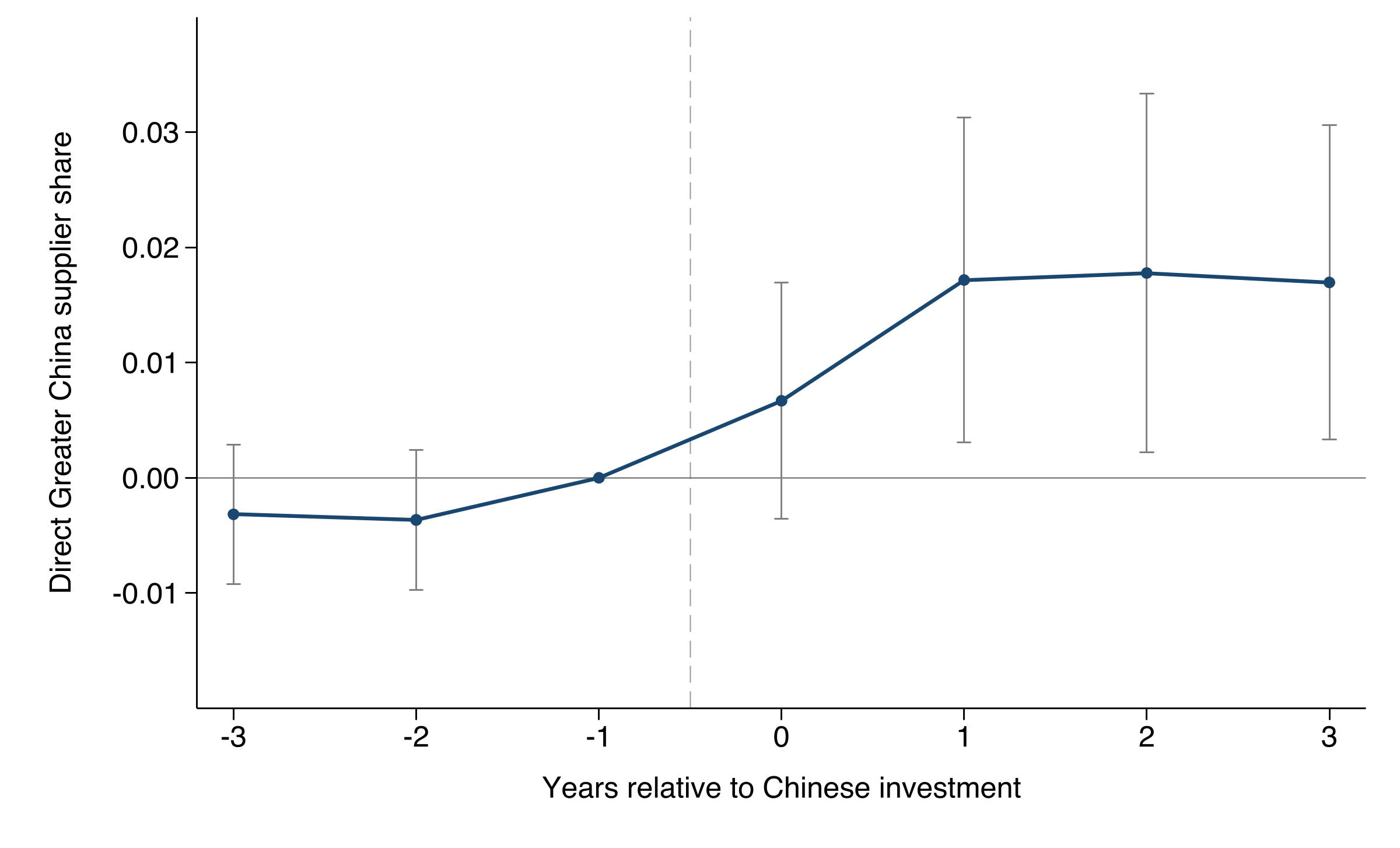
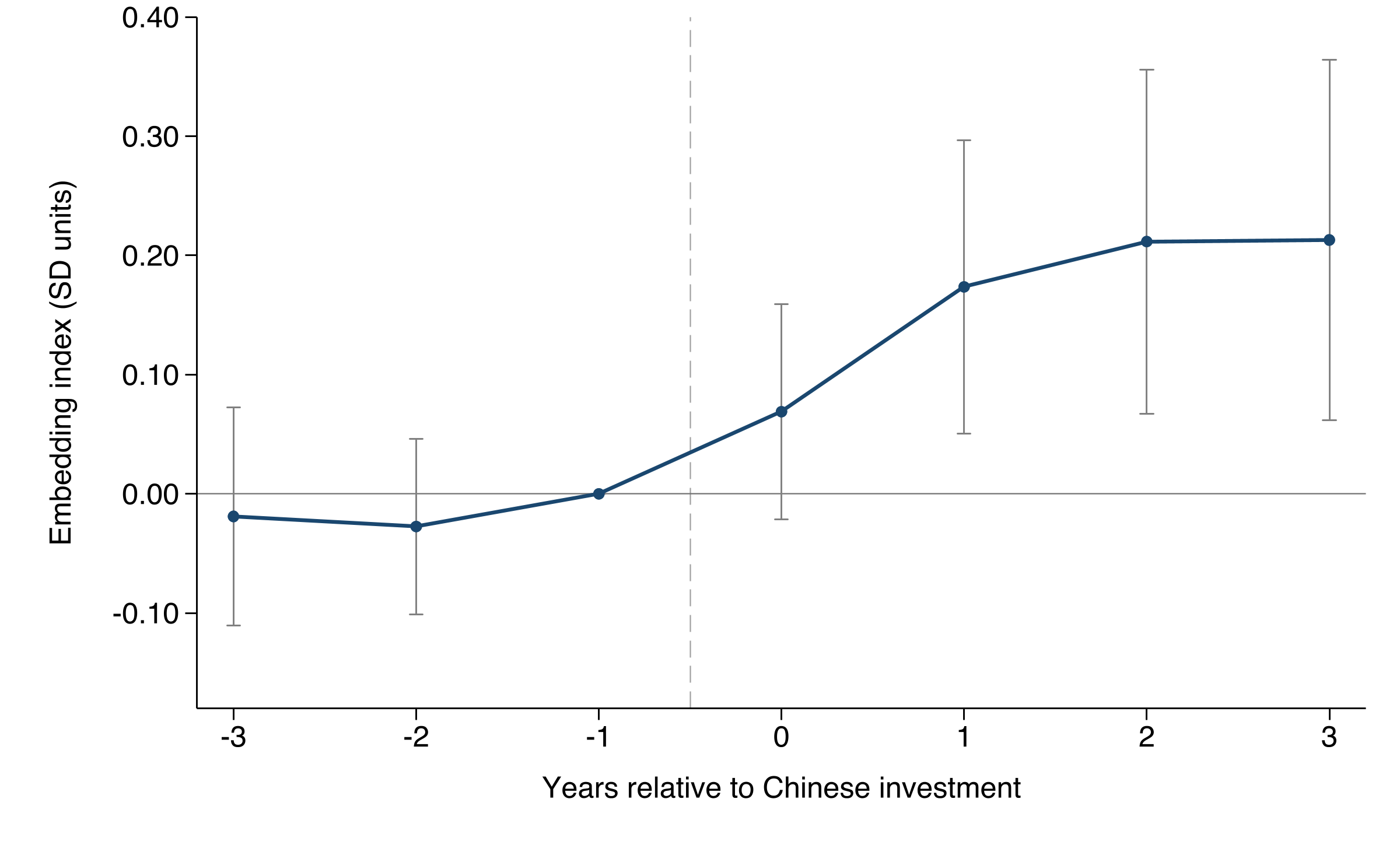
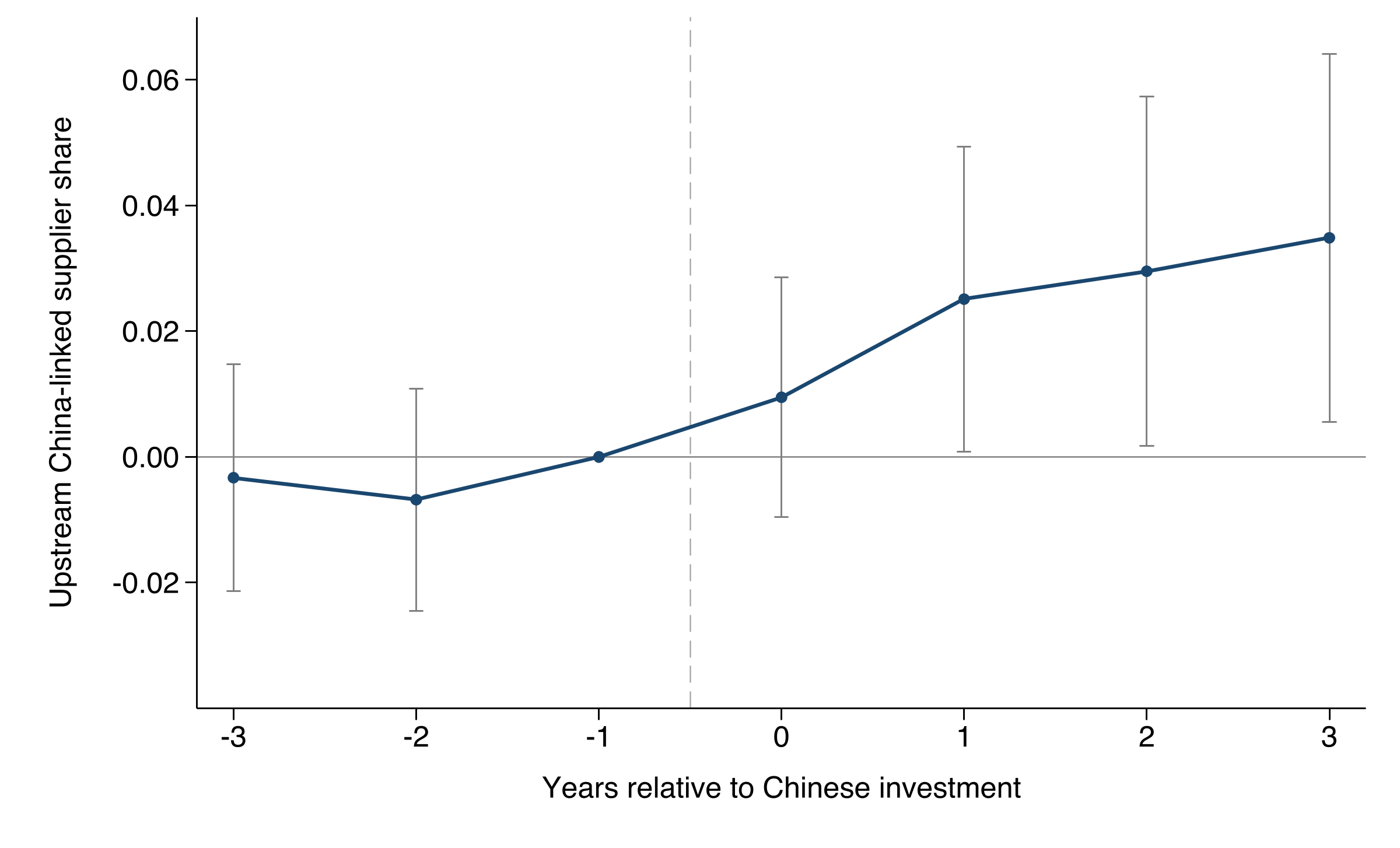
This paper investigates how Chinese outbound foreign direct investment (FDI) influences the integration of host countries into China's global supply network, addressing a key question: Does Chinese FDI deepen supply chain linkages between host economies and China? To answer this, I develop a comprehensive empirical–theoretical framework leveraging a novel dataset that uniquely combines detailed Chinese FDI records, firm-to-firm international trade data, and input–output industry linkages. Empirically, I first provide indirect evidence through sector-level analysis demonstrating significant downstream impacts—Chinese investments in downstream sectors are associated with notable increases in the market share of Chinese firms operating in related upstream industries. Additionally, I uncover evidence of upstream effects, showing that Chinese investments in sectors with high upstreamness correlate with increased host-country exports back to China, particularly benefiting lower-income economies.
Project
From Autoregression to Trade Insight: A Scalable Forecasting Framework for Bilateral Flows
Competition Context: This project was developed for the AI for Trade Challenge, a data science competition focused on predicting bilateral trade flows. The challenge tasks participants with forecasting monthly trade values at a highly disaggregated product level, providing valuable insights for trade policy and economic analysis.
This paper introduces a forecasting framework developed for the AI for Trade Challenge, targeting monthly bilateral trade flows at a high level of product granularity. We construct a model that predicts October 2025 trade values between the United States, China, and their top trading partners at the HS4-product level using a combination of machine learning and time-series baselines. The model incorporates over twenty macroeconomic, financial, and commodity indicators as exogenous drivers. Using LightGBM with a Tweedie loss function, the model handles the zero-inflated, heavytailed nature of trade data. Internal cross-validation indicates promising performance, with sMAPE of 43.22% and a total predicted trade volume of $156.4 billion. We discuss the model's construction, performance, and broader implications for forecasting disaggregated trade flows.
Teaching
Teaching Assistant
- Intermediate Macro Econ (Professor Dan Cao, Spring 2025)
- Public Sector Economics (Professor David Burk, Fall 2024)
- International Trade (Professor Pinar Cebi Wilber, Spring 2024)
- Intermediate Microeconomics (Professor Marius Schwartz, Fall 2023)
Curriculum Vitae
You can download my CV here.
Contact
Email: zc156@georgetown.edu
Phone: (617) 669-7091
Address: Department of Economics
Georgetown University
Washington, DC